VisiFlora Microbiome-Eye Support: Dysbiosis, Barrier Function, SCFAs and Immune Signaling
This page goes deeper into the microbiome side of the gut-eye concept. It explains dysbiosis, intestinal barrier integrity, microbial metabolites such as short-chain fatty acids, immune regulation and molecular-mimicry hypotheses, while keeping the strength of evidence separate from the commercial VisiFlora formula.
Save or follow this source
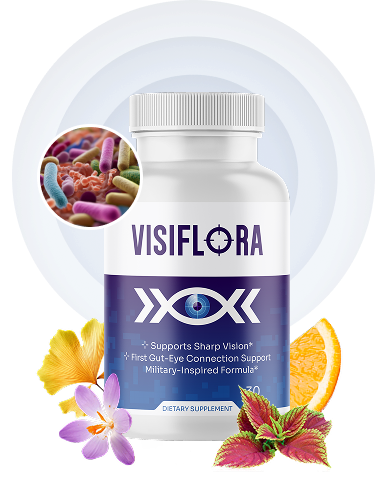



Explore Products
Quick access to every currently published product guide.
 Joint supportJoint GenesisExplore product details and offer.Know More →
 Oral healthProDentimExplore product details and offer.Know More →
 Hearing supportAudifortExplore product details and offer.Know More →
 Metabolic supportGluco6Explore formula and current offer.Know More →
 Eye supportVisiFloraExplore formula, evidence and offer.Know More →
Five microbiome-eye mechanisms commonly discussed in the literature
1. Dysbiosis
Dysbiosis refers broadly to a disrupted or altered microbial ecosystem. Eye-related research examines whether microbial composition differs in people with particular conditions and whether those differences may influence immune or metabolic pathways. An association does not prove that dysbiosis caused the eye condition.
2. Intestinal barrier integrity
The intestinal barrier helps regulate what crosses from the gut environment into systemic circulation. Reviews discuss whether barrier dysfunction can permit microbial products or inflammatory signals to influence distant tissues. This remains a mechanistic framework rather than proof that a specific supplement restores an eye-related outcome.
3. Short-chain fatty acids
Acetate, propionate and butyrate are generated when gut microbes ferment dietary fiber. They are studied for roles in epithelial integrity, immune regulation and inflammatory signaling. Butyrate is also discussed as an important fuel source for colon cells.
4. Immune balance
Gut-eye literature frequently discusses inflammatory T-cell responses and regulatory T cells. Experimental autoimmune uveitis models are among the more developed areas of this work. Some animal studies suggest short-chain fatty acids may influence regulatory T-cell activity and inflammatory-cell migration.
5. Molecular mimicry and adjuvant effects
One hypothesis is that microbial antigens may resemble retinal antigens closely enough to activate cross-reactive immune responses. Other models propose that microbial signals act as immune adjuvants. These remain disease-specific hypotheses rather than broad consumer conclusions.
Check the current VisiFlora formula
Use the live seller page to verify the actual ingredients before connecting any microbiome mechanism to the commercial product.
View Current Formula
Evidence strength differs by eye condition
| Area | What the supplied review material supports | Interpretation |
|---|---|---|
| Noninfectious uveitis | Th1/Th17 vs Treg balance and experimental autoimmune uveitis models | Strong mechanistic interest; much evidence remains preclinical or confounded in humans |
| Age-related macular degeneration | Inflammatory, complement, metabolic and microbiome associations | Interesting multi-layer support, but causality is not established |
| Diabetic retinopathy | Metabolic, inflammatory and microbiome links are discussed | More developed than some areas, but product-specific conclusions require direct evidence |
| Glaucoma | Early microbiome investigations | Still far from a direct clinical link |
| Ocular surface | Microbiome relationships are discussed in some reviews | Evidence is weaker and more heterogeneous |
Where short-chain fatty acids fit into the gut-eye story
Short-chain fatty acids are among the most frequently discussed microbial metabolites in gut-health research. They are produced from dietary fiber and can affect epithelial cells, immune regulation and inflammatory signaling. In experimental autoimmune uveitis models, SCFAs have been studied for effects on regulatory T cells and inflammatory-cell migration.
For buyers, the limitation is direct: a mechanistic role for SCFAs does not show that VisiFlora raises SCFAs, changes the microbiome meaningfully, or improves an eye outcome through that route. Those are separate questions requiring direct product-level evidence.
Dysbiosis should not be treated as a universal explanation
The term “dysbiosis” is broad and can refer to different microbial patterns in different diseases, populations and studies. There is no single dysbiosis profile that automatically explains every inflammatory or degenerative eye condition.
A careful interpretation asks which microbial pattern, in which disease, measured how, and whether changing it actually changes a patient-relevant outcome.
Use microbiome research as context, not as proof
The research helps explain why the gut-eye concept exists. It does not replace direct evidence for the finished VisiFlora product.
Check Current VisiFlora OfferHow diet fits into microbiome-eye research
Independent reviews emphasize that diet is one of the most accessible modulators of the gut microbiome. Fiber intake, overall dietary pattern and metabolic health can influence microbial fermentation, short-chain fatty acid production and systemic inflammatory context.
This matters because supplement marketing can overfocus on a capsule while underplaying the larger biological environment. A microbiome-oriented product should be viewed within the context of diet, lifestyle and medical care rather than as a standalone substitute.
What this means for evaluating VisiFlora
- Separate the microbiome hypothesis from the direct eye-nutrient portion of the formula.
- Check whether the product contains ingredients specifically shown to alter the microbiome rather than assuming every ingredient acts through that route.
- Do not infer clinical benefit from animal or mechanistic studies alone.
- Match ingredient-level studies to actual dose and form before applying them.
- Keep disease-specific evidence separate across uveitis, AMD, glaucoma and other conditions.
- Use the current label to verify the formula rather than relying only on merchant narrative.
Microbiome-eye support vs. gut-eye support formula
The distinction is deliberate. The gut-eye formula page explains the broad product positioning that combines gut-eye language with eye-focused nutrients. This microbiome-eye page goes deeper into dysbiosis, barrier function, microbial metabolites, immune signaling and disease-specific evidence strength.
Health and interpretation boundary
Anyone with new, persistent or worsening visual symptoms should seek appropriate professional evaluation. Microbiome research is not a reason to delay diagnosis or treatment of an eye condition.
People taking prescription medicines, managing chronic conditions, preparing for surgery, or already using multiple supplements should review the complete current label because VisiFlora contains a broad blend of nutrients and botanicals.
Final microbiome-eye check
Use the current label, formula details and condition-specific evidence boundaries together when evaluating the VisiFlora gut-eye story.
Review Current VisiFlora Offer