VisiFlora Bilberry: What This Eye-Support Botanical Adds to the Formula
Bilberry extract is listed in the supplied VisiFlora material as part of the eye-support side of the formula. This page explains why bilberry appears in eye-health supplements, why extract concentration and anthocyanin standardization matter, and why bilberry research should not be treated as direct proof for the finished VisiFlora product.
Save or follow this source


Explore Products
Quick access to every currently published product guide.
 Joint supportJoint GenesisExplore product details and offer.Know More →
 Oral healthProDentimExplore product details and offer.Know More →
 Hearing supportAudifortExplore product details and offer.Know More →
 Metabolic supportGluco6Explore formula and current offer.Know More →
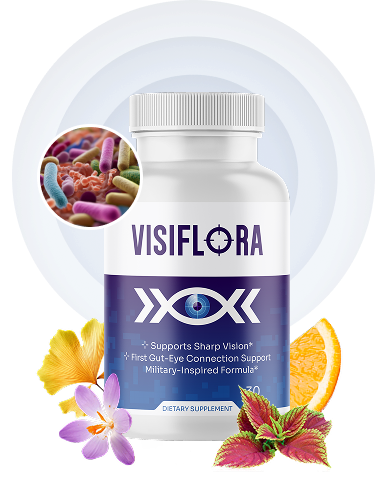
 Eye supportVisiFloraExplore formula, evidence and offer.Know More →
Why bilberry is relevant to eye-support positioning
Bilberry is a botanical ingredient commonly associated with anthocyanin-rich extracts. That makes it relevant to eye-support and antioxidant discussions, but “bilberry extract” is not a complete specification by itself.
The supplied VisiFlora material confirms that bilberry extract is included. It does not establish, for this page, the exact current bilberry amount, extract ratio or anthocyanin standardization. Those details should remain open until supported by the current label or seller specification.
Check the current bilberry specification
Use the current product label to verify the amount, extract concentration and any anthocyanin standardization.
Review Current Formula
Anthocyanins are the key specification question
Bilberry research often focuses on anthocyanin-rich preparations. Anthocyanins are pigment compounds found in berries and other plants, but the amount and profile can vary widely across extracts.
A commercial formula that merely lists “bilberry” or “bilberry extract” may not provide enough information to determine whether it resembles a research preparation. This is why standardization details matter more than the ingredient name alone.
What to look for on a label
- Exact bilberry extract amount.
- Extract ratio, if supplied.
- Anthocyanin standardization, if disclosed.
- Plant part or source information, where relevant.
- Serving size used to calculate the daily amount.
Bilberry inside the broader VisiFlora formula
VisiFlora combines bilberry with lutein, zeaxanthin, zinc, saffron, beta carotene, astaxanthin, lycopene, vitamins, minerals and other botanicals. Any finished-product result would therefore reflect the full blend rather than bilberry alone.
Likewise, a study of a defined bilberry extract should not be presented as direct evidence for the complete commercial formula unless the extract, dose, study population and outcome closely match.
What bilberry research can and cannot establish
Bilberry research can help explain why a standardized extract may be of interest in eye-support or antioxidant contexts. It cannot, by itself, establish that VisiFlora improves vision, prevents eye disease or changes a specific clinical endpoint.
Meaningful interpretation requires matching the actual product specification to the study being cited. Without that match, the evidence remains ingredient-context information rather than product proof.
Match bilberry evidence to the actual label
Compare extract concentration, standardization and dose before treating a study as relevant to VisiFlora.
Check Current LabelEvidence boundaries for bilberry in VisiFlora
Ingredient evidence is not finished-product evidence
Research on bilberry or anthocyanins can help explain why the ingredient appears in an eye-support formula. It does not establish the efficacy of the full VisiFlora product.
Standardization matters
Bilberry extracts can differ in anthocyanin concentration and preparation. Research on one standardized extract may not transfer to another.
Exact dose matters
The supplied project material does not establish a current bilberry amount for this page, so dose-specific comparisons remain unresolved.
Outcome matching matters
Night-vision claims, visual acuity, retinal measures, contrast sensitivity and subjective symptoms are different outcomes. Evidence for one should not be used to imply another.
How this page differs from the broader ingredient pages
The Eye-Health Ingredients page owns the broader eye-focused ingredient subset. This Bilberry page adds depth on extract specification, anthocyanin standardization, dose matching and research equivalence for bilberry specifically.
Buyer checklist for VisiFlora bilberry
- Confirm bilberry extract is still listed on the current label.
- Check whether an exact bilberry amount is disclosed.
- Look for extract ratio or anthocyanin standardization.
- Compare the commercial extract specification with any bilberry study used as a reference.
- Do not transfer bilberry-only evidence directly to the full VisiFlora blend.
- Check overlap if another supplement already contains bilberry or berry-derived polyphenols.
Health and interpretation boundary
People taking prescription medicines, managing chronic conditions, preparing for surgery, or already using multiple botanical supplements should review the current label and seek individualized advice where appropriate.
Anyone with new, persistent or concerning visual symptoms should seek appropriate professional evaluation rather than relying on a botanical supplement to address an undiagnosed problem.
Final bilberry check
Verify the current amount, extract specification and standardization before comparing VisiFlora with bilberry research.
Review Current VisiFlora Offer