VisiFlora Gut-Eye Support Formula: What the Positioning Means and What It Does Not Prove
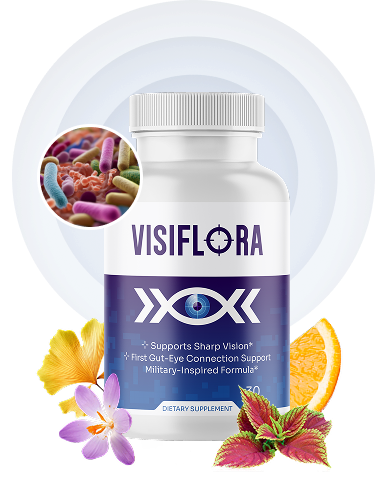
VisiFlora is marketed around a gut-eye support concept that connects digestive biology, immune signaling, antioxidant support and eye-focused nutrients. This page explains how that positioning can be understood without turning biological plausibility into stronger product claims than the available evidence supports.
Save or follow this source
Explore Products
Quick access to every currently published product guide.
 Joint supportJoint GenesisExplore product details and offer.Know More →
 Oral healthProDentimExplore product details and offer.Know More →
 Hearing supportAudifortExplore product details and offer.Know More →
 Metabolic supportGluco6Explore formula and current offer.Know More →
 Eye supportVisiFloraExplore formula, evidence and offer.Know More →
What “gut-eye support” means in this formula context
The phrase is best understood as a product-positioning framework. It draws on research showing that gut microbiota, intestinal barrier function, immune signaling and microbial metabolites can influence systemic biology, including pathways being studied in eye health. That biological connection does not by itself establish that a commercial supplement will improve a specific eye condition.
Gut-related layer
The gut-eye literature often discusses microbiota composition, intestinal barrier integrity, immune balance and metabolites such as short-chain fatty acids. These pathways are relevant because they can influence inflammatory and immune signaling beyond the gut.
Eye-focused layer
VisiFlora also includes ingredients more directly associated with eye-nutrition positioning, including lutein, zeaxanthin, zinc, bilberry, saffron, lycopene and beta carotene. These ingredients belong to a different evidence layer from the gut-mechanism narrative.
Review the current formula and label
Use the current seller page to verify the ingredients and serving information before deciding whether the gut-eye positioning is relevant to your needs.
Check Current Formula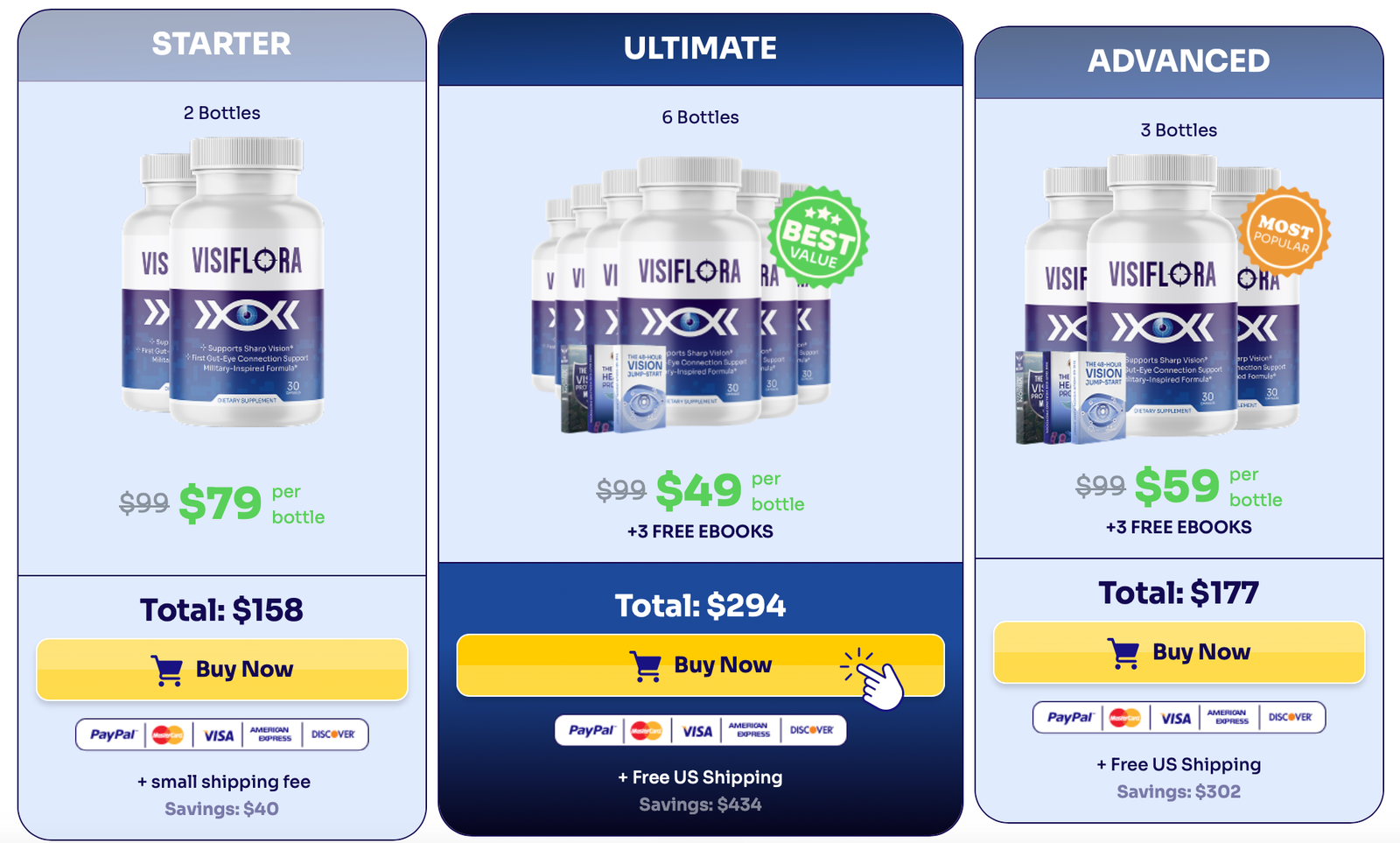
What current gut-eye research broadly suggests
Independent review literature describes several possible connections between the gut and the eye, but the strength of evidence varies by disease area and research model.
Immune signaling
Research on noninfectious uveitis has examined imbalances between inflammatory T-cell responses and regulatory T cells. Experimental work also explores whether gut-derived immune signals can influence ocular inflammation. Much of this work is mechanistic or based on animal models rather than finished-product supplement trials.
Barrier integrity and metabolites
Short-chain fatty acids produced through fiber fermentation are discussed in gut research because of their roles in epithelial integrity and immune regulation. Evidence that a specific commercial supplement changes those pathways in a way that improves a defined eye outcome would require direct testing.
Age-related macular degeneration research
Reviews discuss inflammation, complement pathways, metabolic factors and possible microbiome relationships in age-related macular degeneration. The literature remains careful about causality. Association or biological plausibility should not be converted into a claim that changing the microbiome will prevent or reverse macular degeneration.
Other eye conditions
Research into glaucoma and ocular-surface conditions is less mature in the gut-eye context, which makes disease-specific claims especially inappropriate without stronger direct evidence.
Which VisiFlora ingredient groups are relevant to the gut-eye story?
The formula does not appear to rely on one clearly isolated gut-targeted active. Instead, the merchant combines a broad eye-support and antioxidant formula with a gut-eye narrative.
| Formula group | Examples | How to interpret the role |
|---|---|---|
| Macular carotenoids | Lutein, zeaxanthin | Directly relevant to eye-nutrition positioning, separate from gut mechanisms. |
| Antioxidant nutrients | Vitamin C, vitamin E, astaxanthin, lycopene, selenium | Support broader oxidative-stress framing, but do not prove a gut-mediated effect. |
| Botanicals | Bilberry, saffron, ginkgo, grape seed, eyebright | Contribute to broader eye-support or botanical positioning. |
| Supporting compounds | Taurine, alpha lipoic acid, rutin, quercetin | Add to the multi-pathway formula architecture. |
| Minerals | Zinc, copper, chromium | Part of the nutrient structure; exact label amounts and forms should be checked. |


Why the gut-eye concept should not be reduced to a single mechanism
The gut-eye literature involves several overlapping hypotheses, including immune modulation, microbial metabolites, epithelial barrier function and systemic inflammatory signaling. Different eye conditions may involve different pathways, and the evidence is not equally strong across all of them.
That complexity matters for product interpretation. A commercial supplement may be positioned around one broad concept while containing ingredients chosen for several different reasons. Buyers should therefore evaluate the product formula, the label and the evidence separately rather than assuming every ingredient acts through the gut-eye pathway.
Keep mechanism and product evidence separate
Biological plausibility can explain the product story, but direct finished-product evidence is a separate question.
View Current VisiFlora OfferEvidence boundaries buyers should keep in mind
Mechanistic evidence is not the same as clinical efficacy
A pathway can be biologically interesting without showing that a supplement changes a patient-relevant outcome. That distinction is especially important when research comes from cell models, animal studies or observational associations.
Disease-specific evidence cannot be generalized automatically
Research on one eye condition should not be used to imply benefit for another. Uveitis, age-related macular degeneration, glaucoma and ocular-surface conditions involve different biological questions and different levels of evidence.
Ingredient research does not automatically validate the finished blend
If lutein, saffron or another ingredient has published research, that research still needs to be matched against the actual amount, form and population before being applied to the commercial product.
Diet and lifestyle remain part of the broader context
Gut-health research often emphasizes overall dietary pattern, fiber intake and metabolic health. A supplement is not a substitute for those broader factors or for professional eye care.
Gut-eye support formula vs. microbiome-eye support page
This page owns the broad product-positioning question: how VisiFlora combines an eye-support formula with a gut-eye narrative. The future microbiome-eye support page will focus more narrowly on microbiome mechanisms, dysbiosis, barrier function, short-chain fatty acids and the quality of evidence behind those concepts.
Who should be especially careful with interpretation?
Anyone considering a supplement because of a diagnosed eye condition should separate product marketing from medical management. Persistent or concerning vision changes warrant appropriate professional evaluation, and a supplement should not delay diagnosis or treatment.
People using prescription medicines, managing chronic conditions, preparing for surgery, or already taking multiple supplements should also review the current label because VisiFlora contains a broad mix of nutrients and botanicals.
Final gut-eye formula check
Use the current label, product formula and evidence boundaries together before deciding whether the VisiFlora positioning fits your buying criteria.
Check Current VisiFlora Formula