VisiFlora Formula: How the Ingredient Groups Fit Together
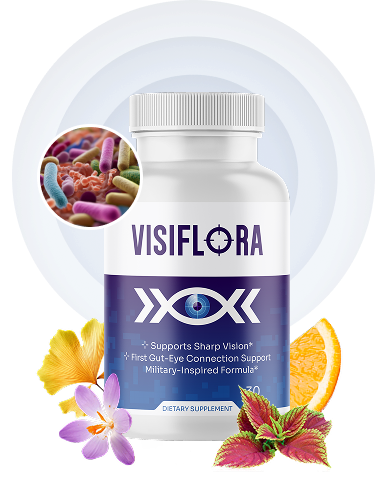
VisiFlora is presented as a broad multi-ingredient vision-support formula rather than a single-nutrient product. This page explains the merchant’s formula architecture: which ingredient groups appear together, how those groups are positioned, and where the evidence limits begin.
Save or follow this source




Explore Products
Quick access to every currently published product guide.
 Joint supportJoint GenesisExplore product details and offer.Know More →
 Oral healthProDentimExplore product details and offer.Know More →
 Hearing supportAudifortExplore product details and offer.Know More →
 Metabolic supportGluco6Explore formula and current offer.Know More →
 Eye supportVisiFloraExplore formula, evidence and offer.Know More →
The VisiFlora formula is built as several overlapping ingredient layers
The supplied merchant material does not present VisiFlora as a single-mechanism product. Instead, it groups a broad set of nutrients and botanical compounds into multiple functional categories. For buyers, this means the formula should be evaluated as an architecture rather than as a single headline ingredient.
Layer 1: carotenoids and eye-focused nutrients
Lutein, zeaxanthin, astaxanthin, lycopene, beta carotene, zinc, bilberry and saffron sit closest to the formula’s eye-focused positioning. These ingredients have different research histories and different roles, so they should not be treated as interchangeable.
Layer 2: antioxidant-related support
Vitamin C, vitamin E, selenium, alpha lipoic acid, grape seed, rutin and quercetin contribute to the broader antioxidant framing. The important buyer question is not merely whether an ingredient is described as an antioxidant, but whether the product discloses enough information about amount and form to interpret that role meaningfully.
Review the current formula before buying
Use the current seller page and bottle label to verify whether the formula architecture described here still matches the product being sold.
Check Current VisiFlora Formula
Botanical and performance-oriented layer
The supplied merchant material also lists ginkgo biloba, coleus forskohlii, eyebright and other botanical ingredients. These are grouped into a broader performance/support narrative rather than being presented as isolated single-ingredient products.



Why botanical specifications matter
Botanical names alone do not reveal concentration, extract ratio, standardization, source or exact dose. Those details can determine whether published research is relevant to the ingredient as it appears in a commercial formula.
Why broad formula language needs restraint
Commercial names such as “vision defense” or “performance boosters” help organize the merchant’s product story, but they are not clinical endpoints and should not be converted into treatment, prevention or disease-reversal claims.
How the formula differs from a traditional single-ingredient supplement
| Dimension | Single-ingredient approach | VisiFlora-style multi-ingredient approach |
|---|---|---|
| Formula complexity | One primary active | Multiple nutrients, carotenoids, botanicals and supporting compounds |
| Evidence matching | Easier to match ingredient, dose and study | Harder to attribute effects to one component or to the blend as a whole |
| Overlap risk | Usually simpler to compare with existing supplements | Requires checking several nutrients and botanicals for duplication |
| Buyer interpretation | Often simpler | Requires more attention to label detail and ingredient forms |
What does the formula architecture tell a buyer?
- VisiFlora is positioned as a broad vision-support supplement rather than a narrow one-ingredient product.
- The formula combines ingredients that are usually discussed in different evidence categories.
- Some ingredients are familiar from eye-nutrition research, while others are used in antioxidant or botanical support contexts.
- The breadth of the blend can be convenient, but it also makes dose and interaction review more important.
- The current label remains necessary for precise interpretation because the supplied material does not fully disclose every amount and form.
Compare formula breadth with your actual needs
A broader ingredient list is not automatically better. Compare VisiFlora against what you already use and what you actually want from an eye-support supplement.
View Current FormulaFormula-level evidence needs to be separated from ingredient-level evidence
The strongest evidence for a finished product would directly test the finished product or a sufficiently matching formulation. Research on a single ingredient can help explain a component, but it should not be used as proof for the entire blend.
Why this distinction matters
If a study uses a particular lutein/zeaxanthin dose, that result does not automatically apply to a formula that also contains many additional ingredients and may use different amounts. The same is true for saffron, bilberry, ginkgo or antioxidant compounds.
Combination effects are not automatically additive
It is tempting to assume that several individually interesting ingredients produce a stronger combined effect. That conclusion requires evidence. Ingredients can interact, overlap or contribute differently depending on dose and formulation.
Commercial architecture is still useful
Even when finished-product clinical evidence is limited, the architecture can help buyers compare VisiFlora with other products. It shows whether the product is broad or narrow, nutrient-heavy or botanical-heavy, and whether the blend overlaps with supplements already being taken.
Formula page vs. Ingredients page vs. Supplement Facts page
The distinctions are deliberate. `/ingredients/` answers “What is in the product?” `/supplement-facts/` answers “What serving and amount information is actually supported?” This `/formula/` page answers “How are the components organized into a commercial formula architecture?”
Who should review a broad formula more carefully?
People already taking multivitamins, eye-health products, antioxidant blends or botanical supplements should compare the total ingredient load rather than reviewing VisiFlora in isolation. The same applies to people using prescription medicines, managing medical conditions, preparing for surgery, or who are pregnant or breastfeeding.
Because the supplied materials do not establish complete amounts and forms for every ingredient, individualized review may require the current bottle label rather than a marketing summary.
Final formula check
Verify the current label, serving and ingredient list before deciding whether this broad multi-ingredient architecture fits your needs.
Check Current VisiFlora Offer